
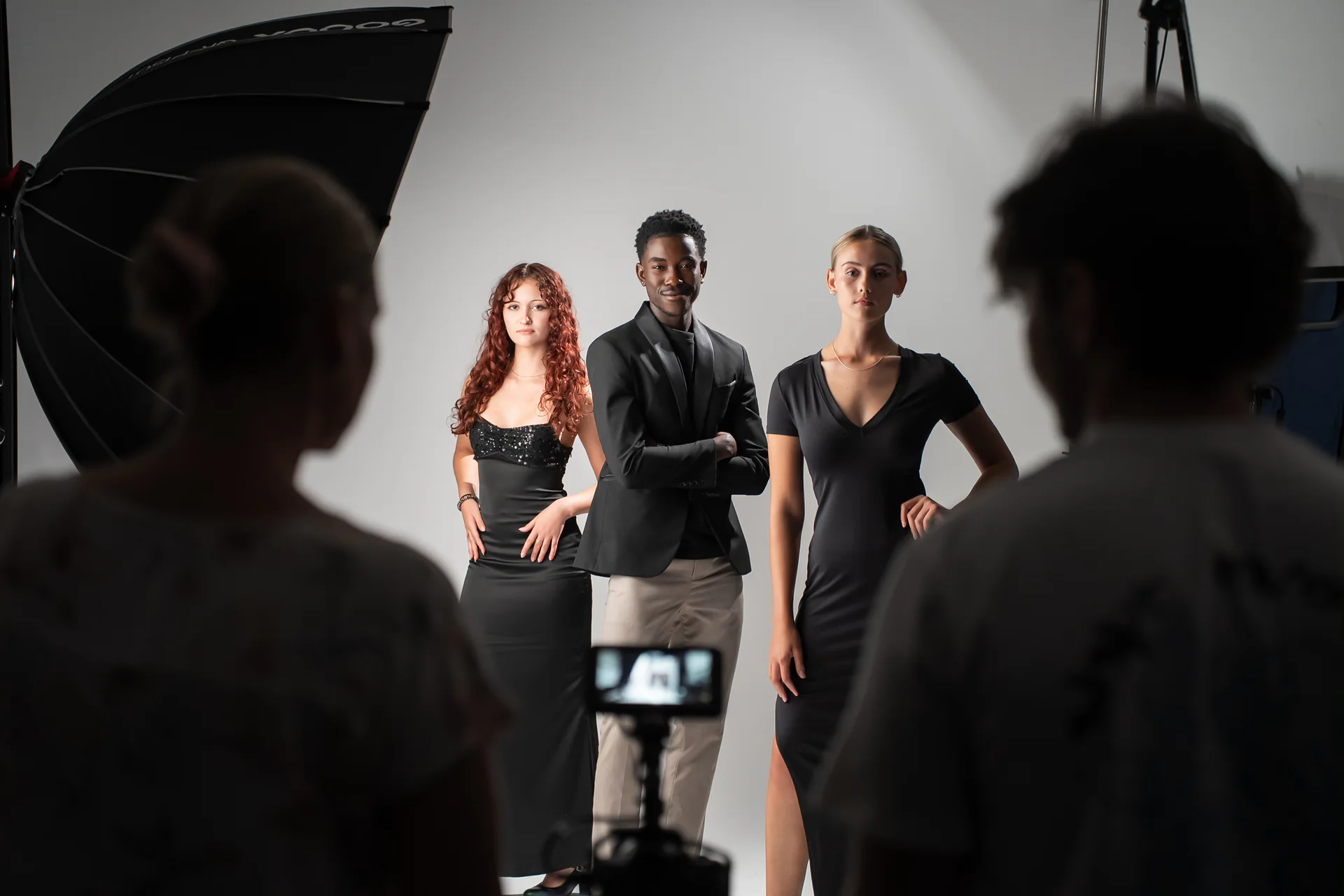
The camera may only be recording for part of a studio booking. Load-in, lighting, sound checks, wardrobe, rehearsals, set changes, file reviews and wrap all use the same session time. Choosing between a half day and a full day is easier when the whole production is scheduled, not only the shot list.
Count setups, not only final images
A setup changes when the team moves the camera, rebuilds the lighting, changes the background or rearranges the set. Ten photographs on one lighting setup may be quicker than three deliverables that each require a different look.
List every meaningful change and estimate how long it takes to move from one to the next. Include a short approval window if a client or stakeholder needs to review the result.
Be realistic about arrival and preparation
Talent rarely steps directly from the door onto a finished set. Allow for load-in, parking, wardrobe, hair and makeup, microphone fitting and briefing. If several departments arrive together, decide who needs access first so the space does not become congested.
A pre-light or prepared set may change the schedule, but it should never be assumed. Confirm what is possible with the studio before building the call sheet.
A half day works best with a focused brief
A shorter session can suit a single interview, straightforward portrait set, product batch or repeatable content format when the team is prepared. References, shot order, wardrobe and approvals should be settled before arrival.
If the brief is still evolving, the shorter booking leaves less room to experiment or recover from delays.
A full day creates room for complexity
A longer session is often more appropriate for multiple looks, larger crews, detailed lighting, several contributors or a combination of stills and video. It also allows time for breaks, file checks and controlled changes without pushing every department at once.
More time should still be scheduled carefully. A full day is most useful when the team knows how it will be used.
Take it to set
Practical checklist
- 01List each lighting, camera, background and set change.
- 02Include load-in, styling, rehearsal, breaks and wrap.
- 03Confirm how many people need to be recorded or photographed.
- 04Decide when client approvals will happen.
- 05Allow time to review files before striking the setup.
- 06Build a small contingency into the schedule.
- 07Share the working timetable with the studio before the day.