
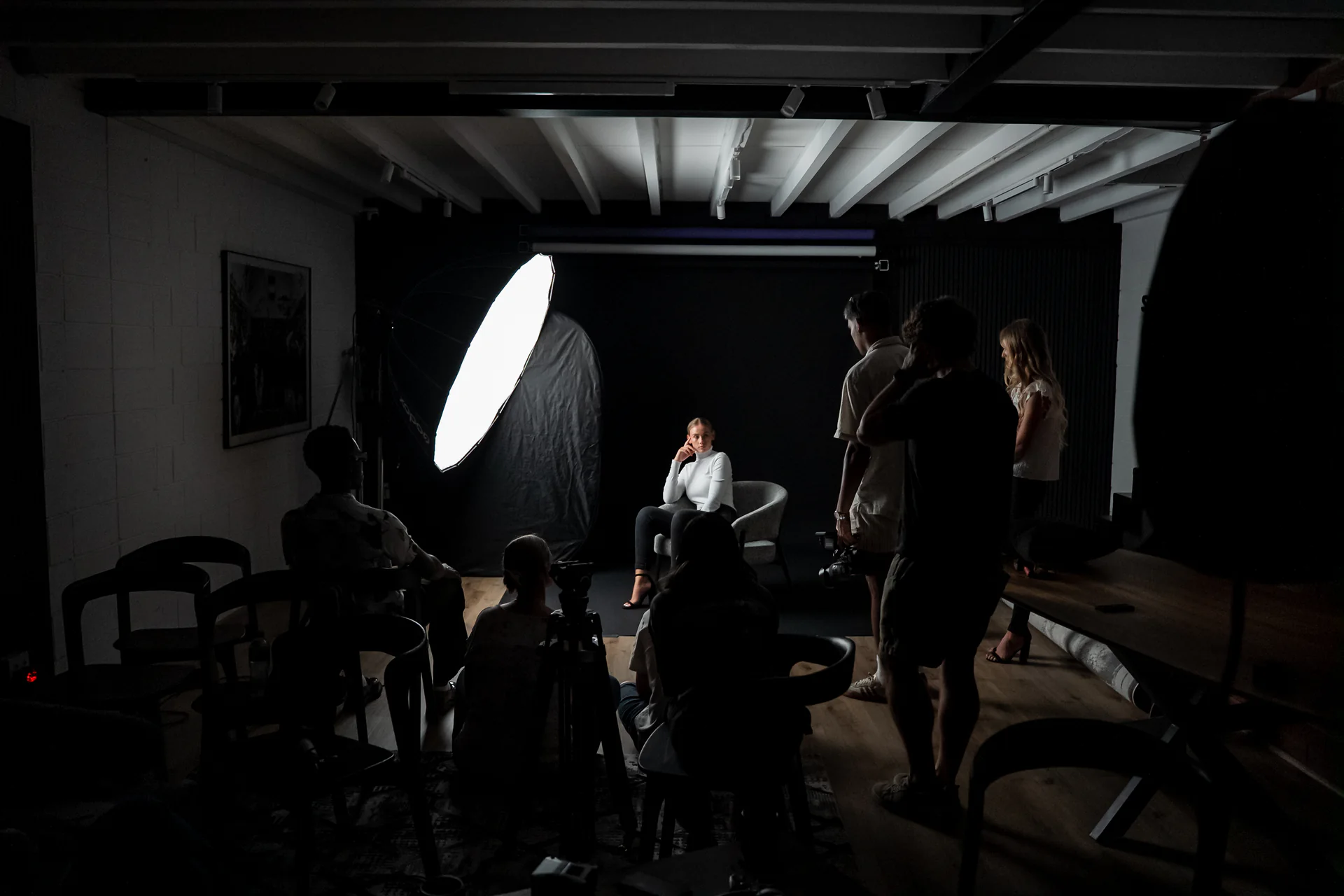
A smooth studio day is usually the result of decisions made before anyone arrives. The purpose of a checklist is not to make a small shoot feel complicated; it is to keep simple details from consuming creative time. Use this as a starting point and adapt it to the size and risk of the production.
Confirm the brief and responsibilities
Circulate the latest brief, shot list, references and schedule to everyone who needs them. Make it clear who approves the creative, who manages the client, who is responsible for camera and sound, and who confirms that files are secure before wrap.
Check the final crew, talent and visitor list. Confirm arrival times, access needs, dietary requirements where applicable and a reliable contact person for the day.
Prepare media, power and backups
Format media only after confirming that existing material is safely stored. Charge batteries, label cards and assign responsibility for media handling. Estimate storage based on the recording format and expected duration rather than relying on empty-card counts alone.
Decide how files will be copied and checked during the day. A backup process is strongest when one named person owns it and records what has been completed.
Build the day in a sensible order
Schedule the most demanding setup with enough preparation time. Group shots that share lighting, camera or wardrobe to reduce unnecessary resets. If talent availability is limited, prioritise the material that cannot be recreated later.
Allow time for technical tests before the first important take. A short camera, lighting and sound review is more valuable than discovering a problem after the set has changed.
Protect people, equipment and the space
Keep exits and walkways clear. Secure cables, stabilise stands and brief the team on moving equipment. Flag any unusual props, liquids, smoke effects, high loads or energetic movement with the studio before the day.
Build breaks into longer schedules. Fatigue affects communication and safety as much as performance.
Wrap methodically
Before dismantling the final setup, review representative files and confirm that essential shots and audio have been captured. Record any missing material or approved changes. Return the studio to the agreed condition, check personal equipment and complete the backup handover.
The best time to find a missing shot is while the talent, crew and set are still together.
Take it to set
Practical checklist
- 01Final brief, shot list, references and call times circulated.
- 02Crew, talent, access and contact details confirmed.
- 03Batteries charged and recording media prepared.
- 04Backup owner and file process assigned.
- 05Lighting, camera and sound tests scheduled.
- 06Safety, unusual props and movement discussed in advance.
- 07Essential files reviewed before the final setup is struck.
- 08Studio, equipment and media checked at wrap.