
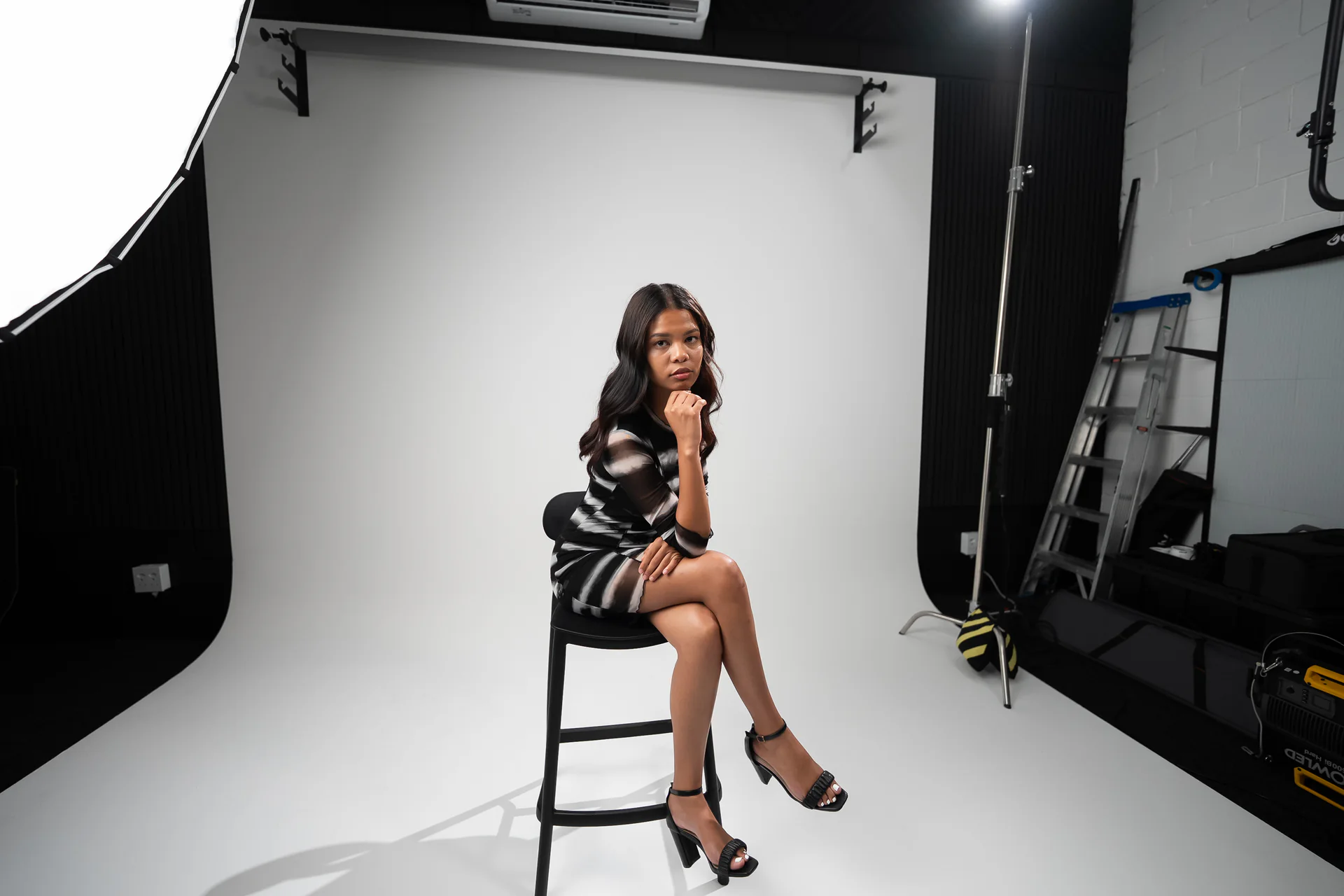
An infinity curve creates the impression that the floor and background continue without an edge. It can make portraits, products and full-body movement feel clean and expansive, but the simplicity of the frame makes every footprint, shadow and exposure change more visible. Preparation is what keeps the result seamless.
Decide whether the background should be white, grey or tonal
The same surface can appear very different depending on exposure and lighting. A bright white result requires enough controlled background illumination, while a grey or graduated background may rely on separation and fall-off. Define the intended tone before building the subject lighting.
Do not judge the curve only by eye. Use the camera and intended exposure settings, because the recorded image determines whether the background reads as clean, textured or uneven.
Give the subject room to separate
Moving the subject away from the background can reduce unwanted shadows and make the lighting easier to control. It also creates more flexibility when the subject needs an edge or rim of separation.
For full-body work, check where feet, props and clothing fall within the lit area. A wide composition may reveal parts of the curve that were not important in a tighter test.
Protect the shooting surface
The floor is part of the image. Limit unnecessary traffic, clean footwear when required and keep drinks, tape residue and equipment edges away from the visible area. Plan stand and cable positions so that the team can work safely without repeatedly crossing the set.
If the production involves messy materials, heavy props or unusual movement, discuss it before the booking. That allows the studio to assess preparation and protection requirements.
Test the widest and most active frame
Start by checking the shot that uses the most space. Rehearse jumps, walking, group positions or prop movement before finalising the lights. This reveals whether shadows leave the intended area and whether the background remains even across the complete action.
Once the wide setup works, tighter frames are usually easier to manage.
Take it to set
Practical checklist
- 01Define the intended background tone before lighting.
- 02Test the curve through the production camera.
- 03Check the widest composition and full movement area.
- 04Allow enough separation to control shadows and spill.
- 05Keep the visible floor clean and unnecessary traffic off it.
- 06Plan cables and stands around safe crew movement.
- 07Tell the studio about messy materials or heavy props in advance.